Your cost per lead keeps rising, and only some of it is your fault.
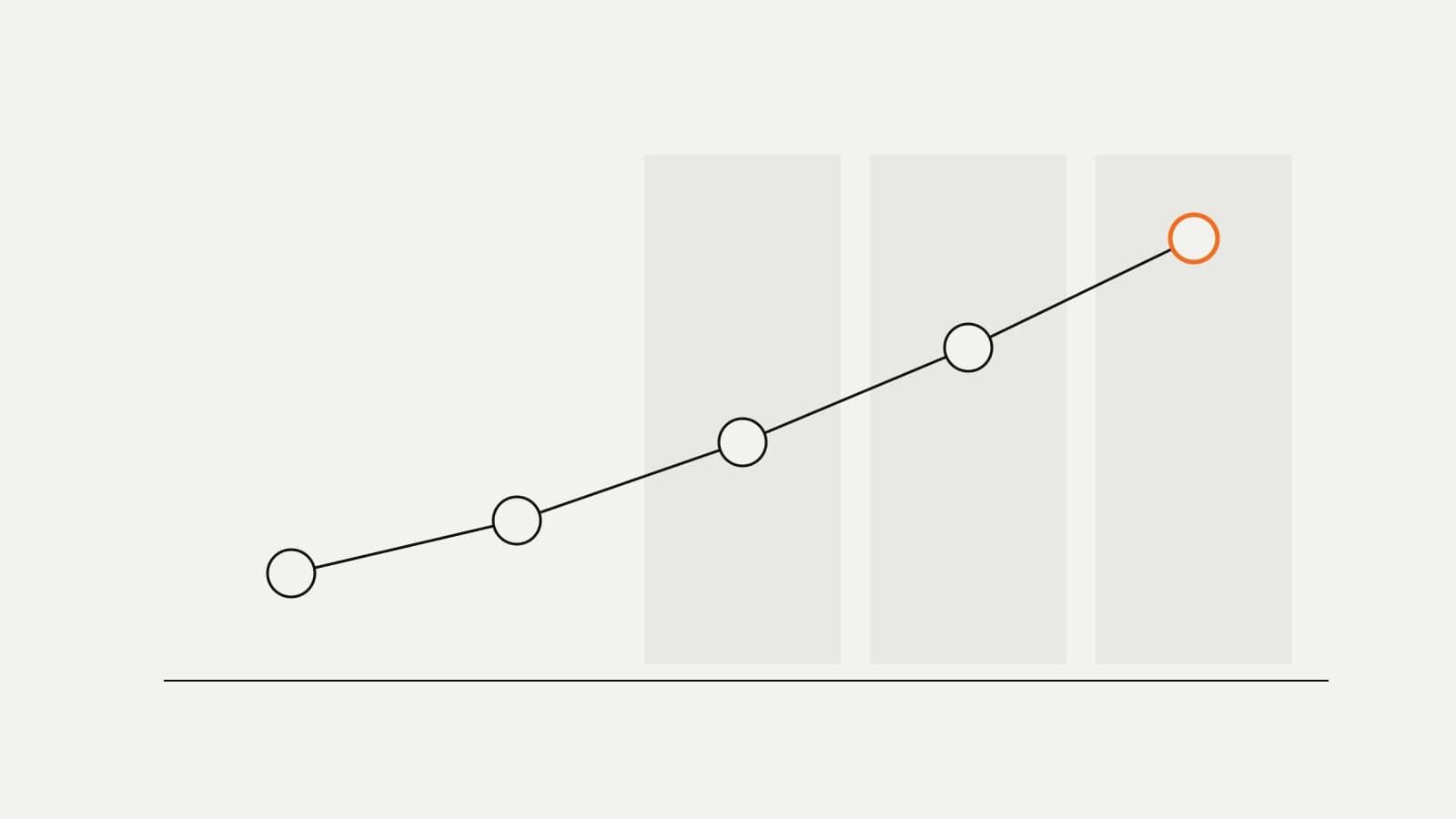
Cost per lead rises for five reasons, and they need opposite responses. More advertisers bidding on the same terms, and fewer organic clicks to go around, are both outside your account and cannot be fixed by changing it. Inside the account, the usual three are broad match without a maintained negative list, conversion tracking that quietly started counting something different, and a landing page converting worse than it did. Work out which of the five moved before you change anything, because raising a bid to solve a landing page problem makes the number worse rather than better.
The number tells you something is wrong and nothing about what
Cost per lead is the first thing most business owners check and the last thing that will tell them what to do. It moves when the auction gets busier, when your tracking breaks, when a landing page slows down, when a competitor starts bidding, when your best converting audience goes quiet for a season, and when somebody changes a bid strategy on a Friday afternoon.
All of those produce the same symptom. A single rising line. So the useful work is never on the line itself, it is on splitting the line into the parts that moved separately.
Two of the five are not yours to fix
The first is simple competition. More advertisers, same keywords, higher clearing price. Nothing in your account causes it and nothing in your account solves it.
The second is newer and less obvious. AI Overviews now appear on a large share of searches, and where they appear the organic click through rate falls sharply. Contently's 2026 analysis of the traffic impact found the classic organic click share down across every vertical measured. The practical effect on advertisers is that the same commercial intent queries carry more advertiser demand than they used to, because the free route to the same customer narrowed.
Knowing these two exist matters even though you cannot change them, because it stops you tearing apart an account that is working.
Broad match without a negative list is the most common of the three
Broad match is not the problem. Broad match with nobody reading the search terms report is the problem. It will find queries adjacent to yours, spend on them, and report the result as a higher cost per lead, because the people arriving were never going to buy.
The check takes twenty minutes. Open the search terms report for the period where the number moved, sort by cost, and read the top fifty. If the pattern is broad, our keyword match type simulator shows what each match type will and will not catch. If more than a handful describe something you do not sell, you have found at least part of your answer.
Tracking that changed is the one nobody suspects
A conversion action that started counting form views instead of form submissions. A tag firing twice after a theme update. A consent banner that began blocking the tag for a portion of visitors. Each of these moves cost per lead without anything about the advertising changing at all.
The tell is that the change is sharp rather than gradual. Competition creeps. Tracking breaks on a date. If your cost per lead doubled in a day, look at what was deployed that day before you look at the auction.
The landing page is where most of the money actually goes
A page converting at 2 percent instead of 3 percent raises your cost per lead by half, and it does it silently, because nothing in the ads account looks different. The clicks cost the same. Fewer of them turn into anything.
This is worth checking first for one practical reason: it is usually the cheapest of the five to fix, and it is the only one where the fix keeps paying after you stop spending.
So which one is yours
Take the period where the number moved and the period before it, and compare four things: cost per click, conversion rate, search terms, and whether anything was deployed to the site. The pair that moved together tells you what happened.
Cost per click up with conversion rate flat is the auction. Conversion rate down with cost per click flat is the page or the tracking. Both moving is both, and the page is the half you control.
If you have done that and the numbers still do not agree with each other, that is usually a tracking problem wearing a performance problem's clothes, and it is worth having somebody look at the account rather than guessing at it for another month. Tell us what changed and when, and we will tell you which of the five it was.
Questions we get asked.
Why is my Google Ads cost per lead increasing?
- Five causes, and they need opposite fixes. More advertisers competing and fewer organic clicks available are outside your account. Broad match without a maintained negative list, conversion tracking that changed, and a landing page converting worse are inside it. Compare cost per click against conversion rate across the period where the number moved, and the pair that moved together tells you which.
Should I lower my bids if cost per lead goes up?
- Only if the cause is the auction. If the cause is a landing page converting worse or tracking counting the wrong thing, lowering bids reduces volume without improving efficiency, and you end up with the same cost per lead and fewer leads.
How do I know if my conversion tracking is wrong?
- Look for a sharp change rather than a gradual one, and check it against your deployment history. Competition moves slowly. Tracking breaks on a specific date, usually the day something was published to the site. Comparing platform conversions against the leads that actually reached your inbox is the fastest confirmation.
Is a rising cost per lead always a problem?
- No. If the leads got better at the same time, a higher cost per lead can still mean a lower cost per customer. That is why the number worth watching is what a lead is worth to you rather than what one costs, and why the two should be read together.
How long should I wait before changing something?
- Long enough to be sure the movement is real rather than a quiet week. On most accounts that is two to four weeks of comparable data. Acting on three days of a dip is how accounts end up with a change history nobody can reason about.